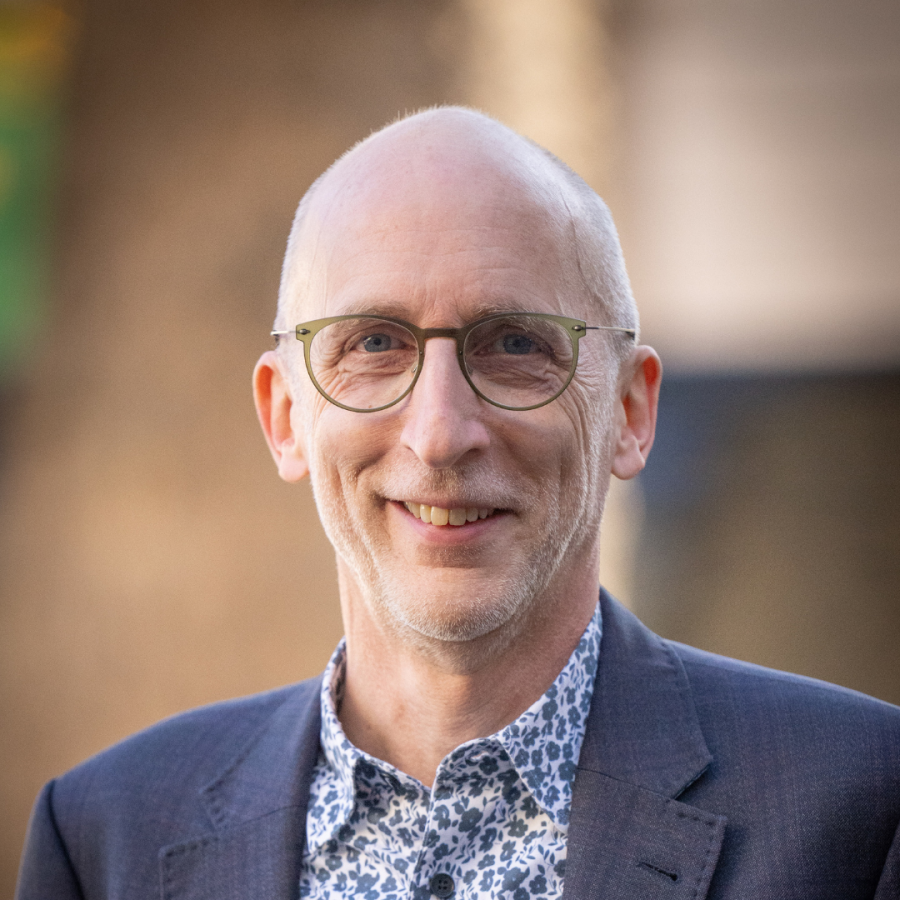
Alex Bax, Chief Executive, Pathway
I’m delighted to introduce the first in a series of reflections and reports from our 15th Annual International symposium. Over the next few weeks we will be publishing blogs written by Pathway Fellows and colleagues, celebrating some of the best bits from this year’s conference and reflecting further on key topics: Lived Experience, Neighbourhood Health, Intermediate Care and Access to healthcare for all.
My own piece below, starts with the words of one of our delegates as they were leaving the conference at the end of day two:
“All these people keep me alive Alex, remind me why we all do what we do, and despite all the shit out there, I get a new shot of hope every year.”
Three weeks ago, at 8 a.m. on a Wednesday morning, I found myself in a café across the road from our conference venue, reading through my notes for the opening session. It’s a small ritual I’ve come to value over the years – a moment of quiet before what some have called the “Glastonbury of inclusion health” begins. This year’s was our 15th annual international homeless and inclusion health symposium, and as Chief Executive of Pathway, I felt the familiar mix of pride, responsibility, and unease.
By 10 a.m., I was on stage with Mandy Pattinson, our lived experience volunteer co-ordinator, tapping the microphone to gather the attention of close to 400 colleagues – practitioners, researchers, campaigners, allies, and friends. As always, the last-minute questions crowded in. Would the opening session land? Had we created the right space for our lived experience colleagues? Would the programme offer enough challenge, enough inspiration – enough hope?
Those nerves felt sharper this year. In part, they reflected the wider context in which we are all working. As CEO of Pathway, I spend much of my time listening – to frontline teams, to NHS partners, to people with lived experience of homelessness. Across those conversations, one theme has become increasingly clear: things feel especially hard right now. Demand is rising, systems are under strain, and for many, the sense of progress we once held onto feels fragile. Maybe I was also worried that our conference – this moment of collective reflection and renewal – might not give people the lift they need in such difficult times.
Since 2011, more than 6,000 people have attended our conferences, hearing over 900 presentations. The knowledge base for inclusion health has grown enormously. We know more than ever about what good care looks like, about what works, and about how to deliver it. And yet, despite this, the changes we know are needed are still not happening at the pace or scale required.
In my opening remarks, I spoke about the political context shaping our work. Almost two years into the new Labour government, hopes of a decisive “shift to inclusion” – a bold, sustained effort to tackle the most extreme health inequalities – have begun to fade. While we have made some important policy gains, the overall picture remains deeply concerning.
For Pathway, the past year has been both rewarding and challenging. One significant success has been our influence on the Government’s new National Plan to End Homelessness. The commitments secured – ending hospital discharges to the street, promoting the use of Better Care funding for homeless intermediate care, and reviewing the Care Act in relation to homelessness – represent real progress. They are the most explicit health service commitments we have seen in homelessness policy.
But paper commitments alone are not enough. The task now is to ensure delivery, and that will require sustained pressure from all of us.
Pathway’s own data tells a stark story. The latest annual report from our national Partnership Programme shows a nearly 30% increase in referrals of patients experiencing homelessness in hospital. Patients are presenting with greater complexity, with more overlapping needs, and teams across the country report that securing appropriate accommodation and support on discharge is becoming ever more difficult. The number of people experiencing homelessness who are admitted to hospital is a brutal indicator of unmet need in our society.
And yet, within this challenging landscape, there are also grounds for hope. Across our network of teams, we have seen improvements against every one of our quality measures: more patients leaving hospital registered with a GP, more getting a holistic care plan, and more than 60% of those admitted from the street not returning there – the highest rate we have recorded. These achievements matter. They remind us that where we have agency, where we can act directly, we can make a difference – despite those wider system struggles.
Also on the positive side the NHS ten-year plan, with its emphasis on shifting care from hospital to community and from treatment to prevention, aligns in many ways with the principles of inclusion health. On day one of the conference Government published its new ‘neighbourhood health framework’, describing national ambitions for joined-up, integrated community health services. However it makes no mention of inclusion health groups and without that deliberate attention, neighbourhood health could miss – or inadvertently exclude – the populations we serve. And of course good inclusion health services already exemplify what neighbourhood health is supposed to be about: integrated, multidisciplinary, trauma-informed, and deeply relational care.
In this endlessly shifting context, I still wanted this year’s conference to give people some hope. Not a naïve optimism, but a grounded, collective determination to recognise what is possible. Across the programme, speakers confronted the realities we face but I also tried to create space for something else: connection, solidarity, and renewed purpose.
The first session signalled our intent, opening with Dr Amy Steven’s talking about the challenges far-right politics represents to inclusion health practice and patients. Tough stuff, but as the panel discussion got going, between our lived experience colleagues Gareth Davies and Jamesy Dillon and our brilliant guest speakers Professor Durka Dougall and Dr Andy Knox, the dialogue shifted towards hope, the possibilities for change, and the power that we have, individually and particularly collectively, to make change happen.
Later that day, deeply personal contributions from our lived experience group, and three serious presentations – from Jo Dawes on frailty in homelessness; Dr Elspeth Carruthers on coroners reports on deaths and homelessness, and California Professor Margot Kushel describing the extent of homelessness in a country without an NHS or functioning system of social protection – prompted our guest, NHS England Medical Director Dr Claire Fuller, to bin her prepared script and speak from the heart. She committed to making sure lived experience is involved in policy making, that coroner’s report recommendations for DHSC are followed up in future, and to get inclusion health written in to developing national service frameworks on frailty and end of life care.
The Thursday morning began with a brilliant plenary session, designed, convened and curated by our lived experience group. This is the subject of another blog in this series so I’m not going to say more here than that it ended with a standing ovation.
By Thursday evening, my earlier fears had dissipated. As people headed home I was stopped again and again by colleagues – old friends and new. They spoke of feeling re-energised, reconnected, reminded of why they do this work. They spoke about the immense power of lived experience voices, about the courage and honesty in the room, about the sense that, even now, change is possible.
For me, that is what our conference has always been about.
It is also, in many ways, about gratitude. My role often involves saying thank you, and this year more than ever, that felt important. To our extraordinary speakers, who brought insight, challenge, and integrity. To our lived experience colleagues, whose leadership continues to shape and strengthen this movement. And to everyone who joined us—bringing their commitment, their expertise, and their determination to make things better.
Fifteen years on, the people who make up the community of inclusion health continue to give me hope, and assembled together they show what inclusion, compassion, and collective action can achieve. No surprise really – hope is always in the people.