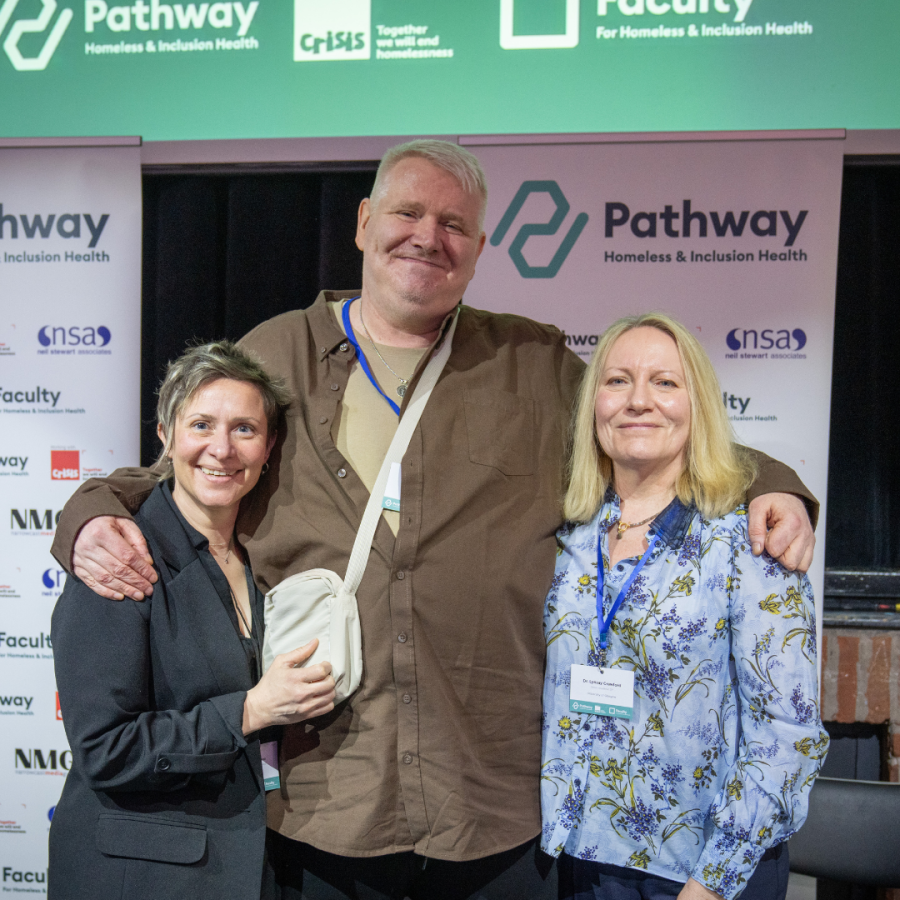
By Jamesy Dillon, Dr Lynsay Crawford and Dr Nic Dickson
We write this as people working across inclusion health – combining research, practice and lived‑experience leadership. Our shared purpose is to improve health and social outcomes for people who are routinely excluded from services, systems, and decision‑making.
Inclusion health is about ensuring everyone has an equal chance to be included and treated with respect, dignity and fairness,
In recent years, the term “lived experience” has become increasingly visible in funding bids, conference agendas, and strategy documents. This should be a positive step. But all too often, lived experience is invited as participation rather than power – an inspiring quote, a panel appearance, or a personal anecdote that is applauded publicly and then quietly set aside when decisions are made.
We want to argue for something deeper and far more transformative.
When we talk about lived experience, we mean knowledge gained through direct experience and encounters with systems. Often that is experience of exclusion: homelessness, poverty, insecure immigration status, addiction, contact with the criminal justice system, or repeated barriers to care. This knowledge is not a flourish or a story added for colour. It is expertise.
“People with lived experiences should be treated as equals, as colleagues, as a professional… not asked to share our trauma for free to make someone else’s report look good.”
Inclusion health exists because society is unequal and resources are unequally distributed. Some people die younger, suffer more, and are blamed more often, not because of individual choices but because systems were never designed with them in mind. If that’s the problem, then solutions designed without lived experience will always be partial and sometimes harmful.
This truth became unmistakably clear at the inaugural, lived experience plenary of the Pathways from Homelessness conference in March 2026. The session was created and led by people with lived experience, and delivered alongside invited academic collaborators chosen specifically because they work in genuine partnership with lived‑experience communities to co‑create research. Mandy, Pathway’s Lived Experience Programme Manager, opened the session by stating why this space mattered. What followed was not tidy or comfortable – and that was precisely the point.
The Pathways Lived Experience panel – Gareth, Pete, and Jamesy – shared their experiences in their own ways. Gareth and Pete spoke honestly about their lives, the systems they had moved through, and the long‑term effects of exclusion on health, identity, and trust. Their accounts resisted simplification. They were vulnerable, direct, and deeply human.
A short film challenged the persistent narrative that homelessness is a ‘lifestyle choice’, making visible the realities people endure and the toll these realities take. Testimony did not collapse neatly into lessons learned. It asked the room to sit with discomfort – something our systems often try to avoid.
Jamesy spoke about Kintsugi or “golden repair”, the Japanese art of repairing broken pottery with gold. He spoke about trauma showing up in bodies, voices, and habits, and how professional spaces often expect people to smooth those marks away. The value lies not in hiding what has been broken but instead by embracing imperfections, we transform them into integral parts of our story, making us even stronger and more beautiful.
“We do not hide our faults, far from it, we wear our trauma as armour. We use our strength and experience to be the voice of the voiceless, examples of what can be achieved with timely interventions and the right support!”
The panel also showcased two conference papers they felt exemplified gold‑standard academic co‑design: Dr Emma Adams’ work on homelessness and health, and the co‑created public information comic on substance dependence and recovery, Pathways of Hope, developed by Dr Nic Dickson and Dr Lynsay Crawford. Emma, Nic and Lynsay spoke about the importance of embedding lived experience into their work and why co-creation must be a partnership of equals – built on trust, honesty, humour and relationships.
Too often lived experience involvement is tightly stage-managed to feel “safe”. Stories are softened, discomfort edited out. But systems that cause harm should feel uncomfortable to hear about. Psychological safety must mean protecting people from being used, exposed, or ignored – not protecting institutions from scrutiny.
The Pathway conference showcased the spectrum of lived experience and the value that each unique voice adds to the conversation. From these conversations comes meaningful solutions and we have seen the positive impact when lived experience partners hold real power. In a recent service redesign, lived experience colleagues flagged fundamental flaws in an appointment model that assumed stable housing, reliable phone access, and ease engaging with authority. Their insights were taken seriously, and the service changed course before launch.
These same principles should be embedded in policy making. Lived experience input is critical from the outset to ensure policy decisions are rooted in real experiences and lead to pragmatic, meaningful change created with those it affects and not imposed upon them.
These examples show transformation, not tokenism.
Tokenistic involvement is not only ineffective—it is dangerous. It gives the illusion of inclusion while reproducing the very harms it claims to address.
Meaningful involvement looks different.
It means sharing control, not just collecting views.
It means investing in relationships, not rushing to meet deadlines.
It means paying people properly for their expertise, through real roles with authority.
And it means recognising that there is no single lived experience voice.
For organisations wondering where to begin, the question is not “How do we involve lived experience?” but “Where do decisions actually get made, and who is missing from those rooms?”
Answering that honestly can be uncomfortable, but it is essential. From there, the work becomes practical: creating paid roles, co‑designing programmes, providing training and support, and closing the loop so people can see the impact of their contribution. Or, as the panel powerfully put it: “People with lived experience should not just have a seat at the table—they should help design the table.”
The session ended with a clear call to action:
“Every one of us here has a voice, and those voices carry the truth of lived experience. When they are heard, valued, and acted upon, they do more than tell stories – they shape policies, build trust, and create services that meet people where they are. That is the power we hold together.”
Something shifted in the room. People stood – not out of politeness but because clarity, honesty, and lived experience had been placed at the centre. That is what transformation looks like.